Word Choice6 Min Read Maya CollinsonAugust 18, 2026 Annual vs Yearly: Which Is Correct and When to Use Each? Annual and yearly are both correct English words, and their meanings overlap strongly. When they appear before a noun, either can often describe…
7 Min Read Maya CollinsonAugust 18, 2026 Quaff or Coif: What’s the Difference? Quaff and coif are both standard English words, but they refer to very… Word Choice
6 Min Read Maya CollinsonAugust 18, 2026 Everyday vs Every Day: What’s the Difference? Everyday and every day look almost identical, but the space changes how… Word Choice
7 Min Read Maya CollinsonAugust 18, 2026 Stripping vs Striping: Meaning, Difference, and Correct Usage Stripping and striping are both correct English words, but choosing the… Word Choice
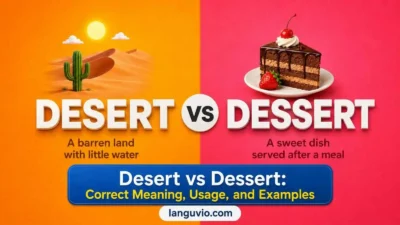
Word Choice6 Min Read Maya CollinsonMay 14, 2026 Desert vs Dessert: Correct Meaning, Usage, and Examples Desert vs dessert is a common mix-up because the words look almost the same. One extra s changes the meaning completely. The correct word… Discover More
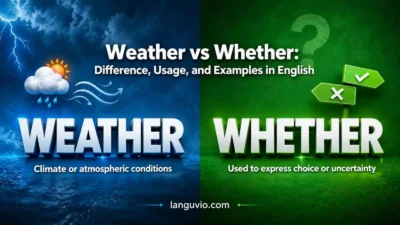
Word Choice6 Min Read Maya CollinsonMay 13, 2026 Weather vs Whether: Difference, Usage, and Examples in English Weather and whether are both correct words, but they do not mean the same thing. Use weather when you mean the conditions outside, such as… Discover More
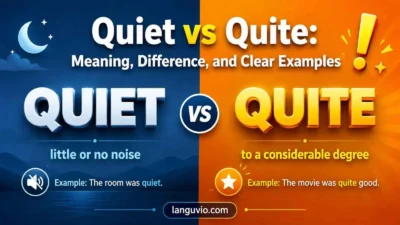
Word Choice6 Min Read Maya CollinsonMay 13, 2026 Quiet vs Quite: Meaning, Difference, and Clear Examples “Quiet” and “quite” are both correct words, but they do not mean the same thing. Use “quiet” when you mean silent, calm, or not noisy. Use… Discover More
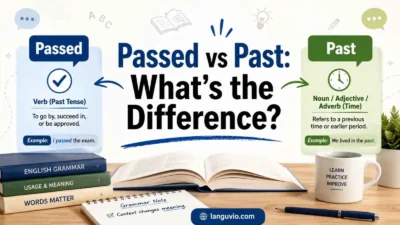
Word Choice7 Min Read Maya CollinsonMay 12, 2026 Passed vs Past: What’s the Difference? Passed vs past is a common word-choice problem because the two words sound the same in everyday US English. Their meanings and grammar roles… Discover More
Word Choice7 Min Read Maya CollinsonMay 12, 2026 Sit vs Set: Easy Difference, Correct Usage, and Examples Sit vs set is a common word-choice problem because the words look and sound close. They are not usually interchangeable. The simple choice is… Discover More
Word Choice9 Min Read Maya CollinsonMay 11, 2026 Rise vs Raise: Meaning, Grammar, Examples, and Easy Tips Rise and raise are easy to confuse because both words often describe upward movement or an increase. Prices can go up, a hand can go up, the… Discover More
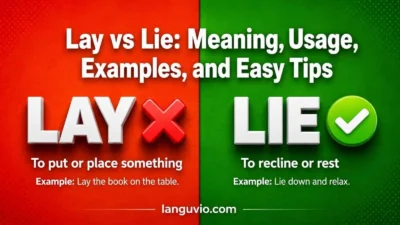
Word Choice10 Min Read Maya CollinsonMay 11, 2026 Lay vs Lie: Meaning, Usage, Examples, and Easy Tips Lay and lie are two of the most confusing verbs in English. Even confident writers pause over sentences like “I need to lay down” or “I need… Discover More
Word Choice8 Min Read Maya CollinsonMay 11, 2026 Farther vs Further: Meaning, Usage, Examples, and Tips Farther and further are easy to mix up because they look similar, sound similar, and both connect to the idea of “more distance” in some way.… Discover More
Word Choice5 Min Read Maya CollinsonMay 9, 2026 Borrow vs. Lend: A Complete Guide to Their Differences “Borrow” and “lend” are two commonly confused verbs in English, even by native speakers. The confusion often arises… Discover More
Word Choice5 Min Read Maya CollinsonMay 9, 2026 Between vs. Among: A Complete Guide to Their Differences The difference between “between” and “among” is subtle but important, and it’s one that many people confuse.… Discover More