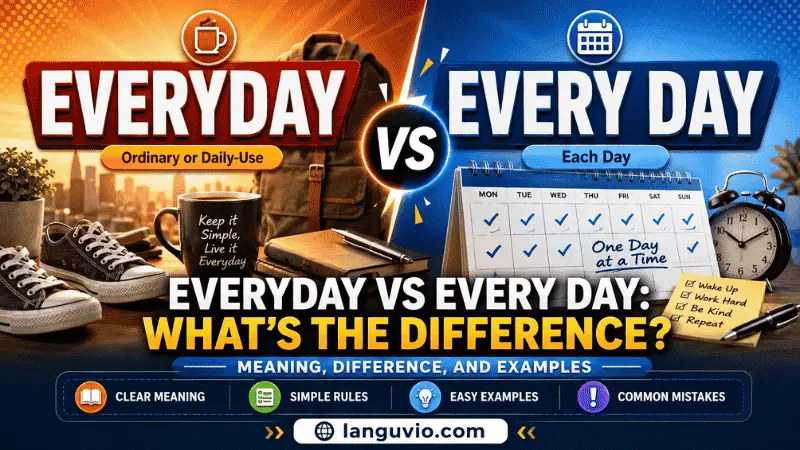
Word Choice6 Min Read Maya CollinsonAugust 18, 2026 Everyday vs Every Day: What’s the Difference? Everyday and every day look almost identical, but the space changes how they work in a sentence. In most US writing, everyday is an adjective meaning…
7 Min Read Maya CollinsonAugust 18, 2026 Stripping vs Striping: Meaning, Difference, and Correct Usage Stripping and striping are both correct English words, but choosing the… Word Choice
7 Min Read Maya CollinsonAugust 17, 2026 Thumb In or Thumb Out: Which Phrase Should You Use? Thumb in and thumb out can both be correct. They describe different… Word Choice
6 Min Read Maya CollinsonAugust 17, 2026 Say vs State: What’s the Difference and When Should You Use Each? Say and state can both describe expressing something in words, but they… Word Choice
Word Choice5 Min Read Maya CollinsonMay 9, 2026 Who vs Whom: A Complete Guide to Their Differences The main difference between “who” and “whom” is that “who” is used as a subject pronoun, while… Discover More
Word Choice4 Min Read Maya CollinsonMay 8, 2026 Compliment vs Complement: Understand the Key Difference While “compliment” and “complement” may sound similar, they have distinct meanings and uses. These two words often… Discover More
Word Choice5 Min Read Maya CollinsonMay 8, 2026 Principal vs Principle: Key Differences Explained The English language is full of words that sound similar but have very different meanings, and principal and principle are prime examples.… Discover More
Word Choice4 Min Read Maya CollinsonMay 8, 2026 Advice vs Advise: Key Differences You Need to Know When it comes to English language nuances, the difference between advice and advise is a common stumbling block for many. Although the two… Discover More
Word Choice6 Min Read Maya CollinsonMay 7, 2026 its vs it’s: Meaning, Correct Use, and Examples Which is correct: its or it’s? Both are correct, but they are used in different ways. Use its when you mean something belongs to, comes from,… Discover More
Word Choice6 Min Read Maya CollinsonMay 7, 2026 Your vs You’re: Simple Meaning, Difference, and Examples Your and you’re are both correct words, but they are not used the same way. Use your when something belongs or relates to the person you are… Discover More
Word Choice10 Min Read Maya CollinsonMay 7, 2026 Affect vs. Effect: The Simple Difference, Rules, and Examples The confusion around affect vs effect is common because both words deal with change. They also look and sound similar, which makes the choice… Discover More
Word Choice7 Min Read Maya CollinsonMay 7, 2026 Then vs Than: Difference, Usage, and Examples Then vs than is a common mix-up because the words look almost the same and often sound alike in fast speech. The correct choice is simple once… Discover More
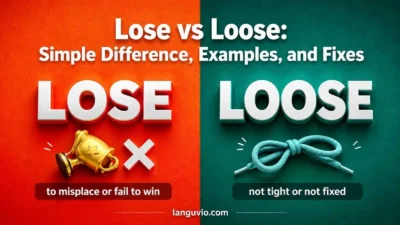
Word Choice6 Min Read Maya CollinsonMay 7, 2026 Lose vs Loose: Simple Difference, Examples, and Fixes Lose vs loose is a common mix-up because the words look almost the same. They are not the same word, and they are not interchangeable. Use… Discover More