“Borrow” and “lend” are two commonly confused verbs in English, even by native speakers. The confusion often arises because both involve the exchange of goods or services, but they are used from different perspectives. Understanding the difference between the two is important for speaking and writing clearly and correctly.
Quick Answer
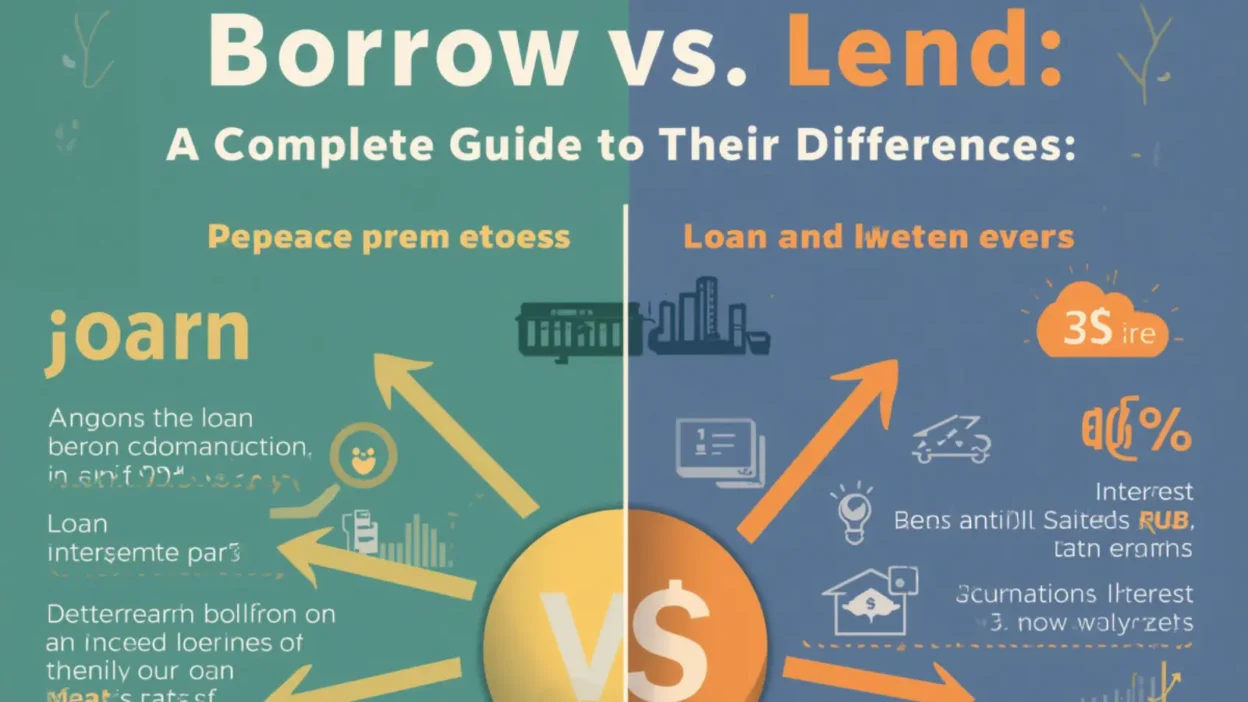
- The difference between “borrow” and “lend” lies in the perspective of the action. “Borrow” is used when you take something with the intention of returning it, while “lend” is used when you give something with the expectation that it will be returned.
In this article, we’ll explain when to use “borrow” and when to use “lend,” offer plenty of examples, and clarify common mistakes to help you use both verbs confidently.
Why People Confuse Them
The confusion between “borrow” and “lend” stems from their similar meanings. Both involve taking and giving something with the expectation that it will be returned. However, the key distinction is that “borrow” refers to the perspective of the person receiving the item, while “lend” refers to the perspective of the person giving the item.
In everyday speech, people often mistakenly use “borrow” in situations where “lend” is correct, such as saying, “Can you borrow me money?” when the proper phrase should be “Can you lend me money?” This happens because the verbs sound similar and are often used in similar contexts.
Key Differences At A Glance
- Borrow: Used when the subject is the one receiving something with the intent to return it.
- Lend: Used when the subject is the one giving something with the expectation that it will be returned.
- Borrow implies receiving, while lend implies giving.
- Borrow is used when the focus is on the receiver; lend is used when the focus is on the giver.
- Meaning and Usage Difference
The difference between “borrow” and “lend” is rooted in the direction of the action. Here’s how they are used:
- Borrow: This verb is used when the subject is the person or entity receiving something with the intention of returning it later.
- Example: “I borrow money from my friend.”
- Example: “Can I borrow your book for the weekend?”
- Lend: This verb is used when the subject is the person or entity giving something to someone else, with the expectation that it will be returned.
- Example: “I lend money to my friend.”
- Example: “Can you lend me your book for a few days?”
The key difference is the point of view: when you “borrow,” you are taking something; when you “lend,” you are giving something.
Tone, Context, and Formality
Both “borrow” and “lend” are used in both formal and informal contexts, but they are often used differently depending on the setting:
- Borrow: While “borrow” is common in everyday speech, it’s often used in both formal and informal contexts. For example, in a business setting, one might say, “I need to borrow some documents for the project.”
- Lend: “Lend” is often used more formally, especially when referring to money or items of value. In a formal context, you might say, “Could you lend me the report for review?”
Both verbs are versatile, but in more formal settings, “lend” tends to be preferred for transactions involving more serious or professional exchanges.
Which One Should You Use?
To choose between “borrow” and “lend,” consider whether you are the one receiving or giving something:
- Use “borrow” when you are receiving something with the intention of returning it:
- “I need to borrow your pen.”
- “Can I borrow some sugar?”
- Use “lend” when you are giving something to someone with the expectation that it will be returned:
- “I will lend you my pen.”
- “Could you lend me some sugar?”
Remember: “borrow” = receiving, and “lend” = giving.
When One Choice Sounds Wrong
The wrong choice often sounds awkward because the perspective is reversed. For example, if you say:
- Incorrect: “I borrowed him money.” (This is wrong because you’re the one giving the money.)
- Correct: “I lent him money.”
On the flip side, using “lend” when you mean to say “borrow” also sounds strange:
- Incorrect: “Can you lend me your car?” (This sounds like you’re offering to give the car.)
- Correct: “Can you borrow my car?” (Although this is correct, the phrasing would be more natural as: “Can I borrow your car?”)
Common Mistakes
Here are some common errors people make when using “borrow” and “lend,” along with how to fix them:
- Incorrect: “I will borrow you my book.”
- Correct: “I will lend you my book.”
- Incorrect: “Can you lend me your pen?”
- Correct: “Can you borrow me your pen?” (More natural: “Can I borrow your pen?”)
- Incorrect: “She borrowed me $10.”
- Correct: “She lent me $10.”
The key to avoiding mistakes is understanding that “borrow” is for the receiver, and “lend” is for the giver.
Everyday Examples
Here are some examples that demonstrate the proper use of “borrow” and “lend” in everyday situations:
- Borrow:
- “I need to borrow a few dollars.”
- “She borrowed my car for the weekend.”
- “He asked if he could borrow my notes.”
- Lend:
- “I’ll lend you my umbrella.”
- “They lent us their house for the holidays.”
- “Can you lend me a pencil?”
These examples show the correct use based on who is receiving and who is giving.
Dictionary-Style Word Details
Verb
- Borrow: To take something from someone with the intention of returning it later.
- Lend: To give something to someone with the expectation that it will be returned.
Noun
- Borrow: No noun form typically used.
- Lend: Used in contexts like “a lend of money” or “a lend of books.”
Synonyms
- Borrow: “Take,” “obtain,” “request.”
- Lend: “Loan,” “advance,” “grant.”
Example Sentences
- Borrow: “Can I borrow your phone for a second?”
- Lend: “I will lend you the money for the trip.”
Word History
- Borrow: Derived from Old English “borgian,” meaning “to lend or borrow.”
- Lend: Originates from Old English “lendan,” meaning “to give something temporarily.”
Phrases Containing
- Borrow: “Borrow a favor,” “borrow a book,” “borrow trouble.”
- Lend: “Lend a hand,” “lend an ear,” “lend support.”
FAQ
1. Can I say “borrow me money”?
- No, the correct phrasing is “Can you lend me money?” because “lend” is used from the perspective of the giver.
2. When should I use “borrow” vs. “lend”?
- Use “borrow” when you are receiving something and “lend” when you are giving something.
3. Is it ever okay to say “I lend you”?
- No, it should be “I lend you” only if you’re the one giving something. If you’re receiving, it should be “I borrow from you.”
Conclusion
Knowing the difference between “borrow” and “lend” is essential for clear communication. By remembering that “borrow” is for receiving and “lend” is for giving, you can ensure your usage is grammatically correct and easily understood. With the tips, examples, and common fixes provided here, you’ll be able to use both verbs correctly in all contexts.