Ensure vs insure confuses many writers because the words sound alike and look alike. However, they do not usually fit the same situations.
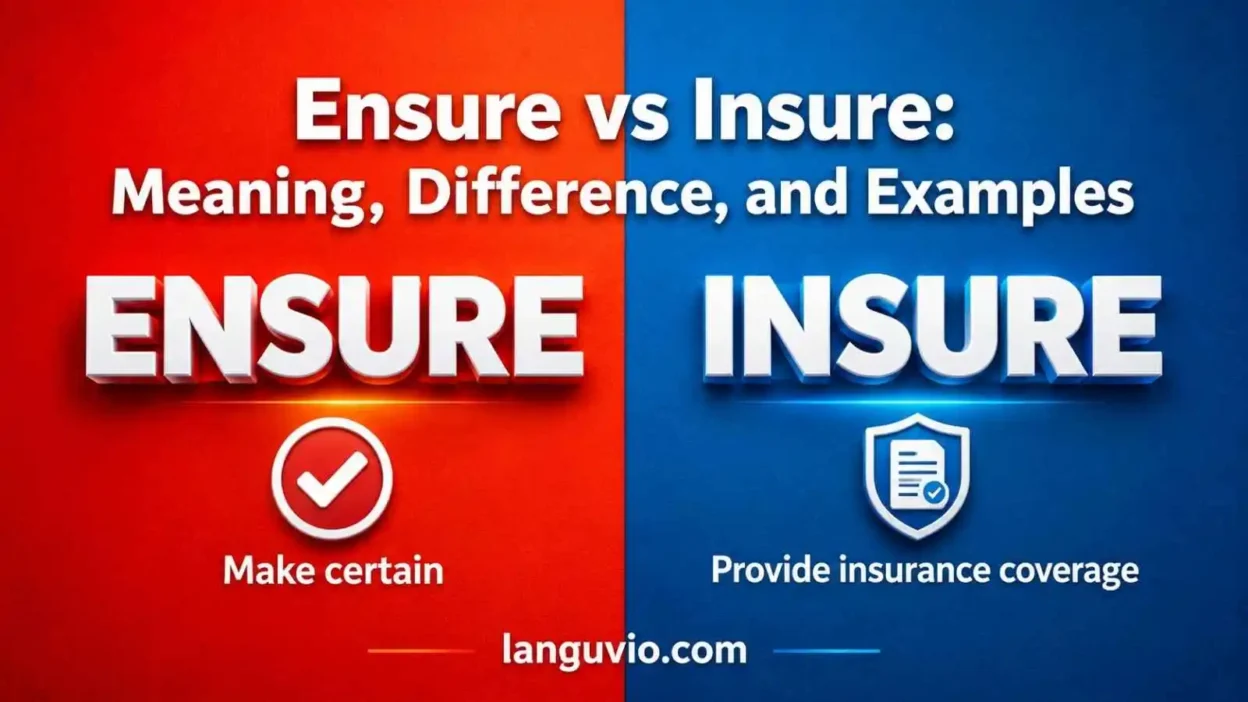
In modern US English, ensure means “make sure.” Meanwhile, insure usually means “cover with insurance.”
So, you should write, “Please ensure the form is complete,” when you mean “make sure.” However, you should write, “We need to insure the car,” when you mean “buy insurance for it.”
Quick Answer
Use ensure when you mean make certain.
Use insure when you mean protect with insurance.
For example, say:
- Please ensure the door locks behind you.
- We need to insure the house before closing.
Therefore, ensure works best for certainty, plans, safety, rules, and results. In contrast, insure works best for insurance policies, coverage, claims, and financial protection.
Why People Confuse Them
People confuse ensure and insure for two main reasons.
First, the words sound the same in everyday speech. Most US speakers pronounce both words like “in-SHOOR.”
Second, both words can suggest protection. For example, a checklist can help ensure safety. Likewise, an insurance policy can insure a home against loss.
However, the type of protection differs. Ensure protects a result by making it more certain. Insure protects a person or item through insurance coverage.
Because of that difference, readers usually expect ensure in general writing and insure in insurance-related writing.
Key Differences At A Glance
| Feature | ensure | insure |
| Basic meaning | Make certain | Cover with insurance |
| Main idea | Certainty or a result | Insurance or financial protection |
| Common object | A plan, rule, result, deadline, or safety step | A car, home, person, business, or package |
| Best context | Work, school, safety, planning, instructions | Insurance, finance, legal coverage, risk |
| Example | Please ensure the file opens correctly. | You should insure the car before driving it. |
Meaning and Usage Difference
Ensure means to make sure something happens or proves true. As a result, it often appears with goals, checks, plans, deadlines, rules, and safety steps.
Examples:
- We checked the numbers to ensure accuracy.
- Please ensure everyone signs the form.
- The reminder should ensure we arrive on time.
In each sentence, ensure points to a result. The writer wants something to happen correctly.
Insure, on the other hand, means to provide or buy insurance. Therefore, it fits sentences about policies, coverage, property, claims, risk, and financial loss.
Examples:
- I need to insure my new car.
- The company will insure the shipment.
- They insured the building against fire damage.
In each sentence, insure connects to insurance coverage.
However, one detail can confuse writers. Some dictionaries allow insure to mean “make certain.” Even so, ensure usually gives readers the clearer choice when no insurance policy exists.
Tone, Context, and Formality
Both words sound standard and professional. However, they create different expectations.
Ensure sounds natural in business emails, school papers, workplace policies, instructions, safety rules, and everyday writing.
For example:
- Please ensure your contact information stays current.
- This process helps ensure better service.
- The manager called to ensure the team had the right address.
Meanwhile, insure sounds natural in financial, legal, and insurance-related contexts.
For example:
- The owner insured the rental property.
- The policy insures the driver against certain losses.
- You can insure the package before shipping it.
Because of that, insure can sound odd when no insurance meaning appears. For instance, “Please insure the report is accurate” may distract readers. Instead, “Please ensure the report is accurate” sounds clear and natural.
Which One Should You Use?
Ask one simple question: Does the sentence involve insurance coverage?
If yes, choose insure.
If no, choose ensure.
| Context | Best Choice | Why |
| Making sure a report has no errors | ensure | The sentence focuses on certainty. |
| Buying coverage for a car | insure | The sentence focuses on insurance. |
| Checking that a door locks | ensure | The sentence focuses on a result. |
| Covering a home against storm damage | insure | The sentence focuses on financial protection. |
| Making sure a meeting starts on time | ensure | The sentence focuses on planning. |
| Covering jewelry against theft | insure | The sentence focuses on insurance coverage. |
Therefore, ensure handles most everyday “make sure” sentences. Insure handles sentences about insurance.
When One Choice Sounds Wrong
Sometimes both words may seem possible at first. However, the wrong choice can make the sentence confusing.
Use ensure when the sentence means “make sure.”
Wrong: Please insure the files are updated.
Correct: Please ensure the files are updated.
Wrong: This checklist will insure a smoother process.
Correct: This checklist will ensure a smoother process.
Wrong: The teacher called to insure every student had a ride.
Correct: The teacher called to ensure every student had a ride.
Now compare that with insurance contexts.
Wrong: We need to ensure the boat against storm damage.
Correct: We need to insure the boat against storm damage.
Wrong: Did you ensure your new phone?
Correct: Did you insure your new phone?
Wrong: The policy ensures the driver against liability claims.
Correct: The policy insures the driver against liability claims.
In short, ensure fits results. Insure fits coverage.
Common Mistakes (and Quick Fixes)
One common mistake happens when writers use insure as a fancy version of ensure. However, this often makes the sentence less clear.
Mistake: I will insure that the team has the right address.
Fix: I will ensure that the team has the right address.
Mistake: The new rule will insure better communication.
Fix: The new rule will ensure better communication.
Another common mistake happens when writers use ensure for insurance coverage.
Mistake: We need to ensure the house before the move.
Fix: We need to insure the house before the move.
Mistake: The company ensured the truck against theft.
Fix: The company insured the truck against theft.
Also, avoid using insure just because the sentence feels formal. Ensure already sounds professional when you mean “make sure.”
Everyday Examples
Here are more natural examples that show the difference clearly.
- Please ensure your email address matches your account.
- The checklist helps ensure nothing gets missed.
- We called ahead to ensure the restaurant had space.
- The new lock should ensure better security.
- Please ensure the payment goes through before Friday.
- The reminder helped ensure we left on time.
Now compare those with insurance examples.
- We need to insure the car before the road trip.
- The gallery insured the painting during transport.
- Our landlord requires us to insure the apartment contents.
- You can insure the package for its full value.
- The company insured its equipment against damage.
- Many parents insure teen drivers under a family policy.
Together, these examples show the main pattern. Ensure makes something certain. Insure connects something to insurance.
Dictionary-Style Word Details
Verb
- Ensure: Ensure works as a verb. It means to make sure something happens or remains true. For example, “The second review helps ensure accuracy.”
- Insure: Insure also works as a verb. It means to cover someone or something with insurance. For example, “The owner plans to insure the building.” In some contexts, insure can also mean “make certain,” but ensure usually sounds clearer for that meaning in everyday US writing.
Noun
- Ensure: Ensure does not commonly work as a noun in standard US English.
- Insure: Insure does not commonly work as a noun in standard US English. However, the related noun insurance appears often, as in “health insurance,” “car insurance,” and “home insurance.”
Synonyms
- Ensure: Closest plain alternatives include make sure, guarantee, secure, and confirm, depending on the sentence. For example, “ensure accuracy” can mean “make sure the information stays accurate.”
- Insure: Closest plain alternatives include cover, protect with insurance, and provide insurance for. For example, “insure the car” means “cover the car with insurance.”
- Antonyms: Exact opposites depend on context. For ensure, possible opposites include risk, leave uncertain, or neglect. For insure, possible opposites include leave uninsured or decline coverage.
Example Sentences
- Ensure: Please ensure the final invoice matches the estimate.
- Ensure: Training helps ensure employees follow safety rules.
- Ensure: The reminder will ensure we meet the deadline.
- Ensure: Double-check your address to ensure the package arrives.
- Insure: We need to insure the new office equipment.
- Insure: The homeowner insured the property against storm damage.
- Insure: The policy insures the driver for liability claims.
- Insure: You may want to insure expensive camera gear before traveling.
Word History
- Ensure: Ensure has long carried the idea of making something sure or certain.
- Insure: Insure developed a strong connection with insurance and financial protection.
Today, writers do not need a long history lesson to choose correctly. Instead, the modern usage pattern matters most: ensure for making sure, and insure for insurance coverage.
Phrases Containing
- Ensure: Common phrases include ensure safety, ensure accuracy, ensure compliance, ensure success, ensure access, and ensure that.
- Insure: Common phrases include insure a car, insure a home, insure against loss, insure against theft, insure a business, and fully insure.
These phrases also show the difference. Ensure often follows goals or results. Meanwhile, insure often follows people, property, or risks.
FAQs
Is it ensure or insure?
Use ensure when you mean “make sure.” Use insure when you mean “cover with insurance.”
For example:
- Please ensure the address is correct.
- We need to insure the car.
Is “insure that” wrong?
“Insure that” can appear in some writing. However, ensure that sounds clearer and more natural when you mean “make certain.”
Better:
- This step will ensure that the package arrives safely.
Can ensure and insure be used interchangeably?
Not usually. Although the words overlap in some definitions, modern readers expect ensure for certainty and insure for insurance coverage.
Should I say “ensure safety” or “insure safety”?
Say ensure safety.
Example:
- The new rule helps ensure safety in the workplace.
Should I say “ensure the car” or “insure the car”?
Say insure the car when you mean buying or providing insurance coverage.
Example:
- I need to insure the car before I drive it.
What is the noun form of insure?
The related noun is insurance.
Example:
- I renewed my car insurance yesterday.
Does ensure have a noun form?
Ensure normally works as a verb. It does not have a common noun form in standard US English.
What is the easiest way to remember the difference?
Think of insure as connected to insurance. For almost everything else where you mean “make sure,” choose ensure.
Conclusion
The difference between ensure vs insure comes down to one clear idea.
Use ensure when you mean make sure.
Use insure when you mean cover with insurance.
Therefore, “ensure the report is accurate” and “insure the car” both sound correct because each word fits its own context. When no insurance policy appears in the sentence, ensure will usually give you the cleaner and more natural choice.