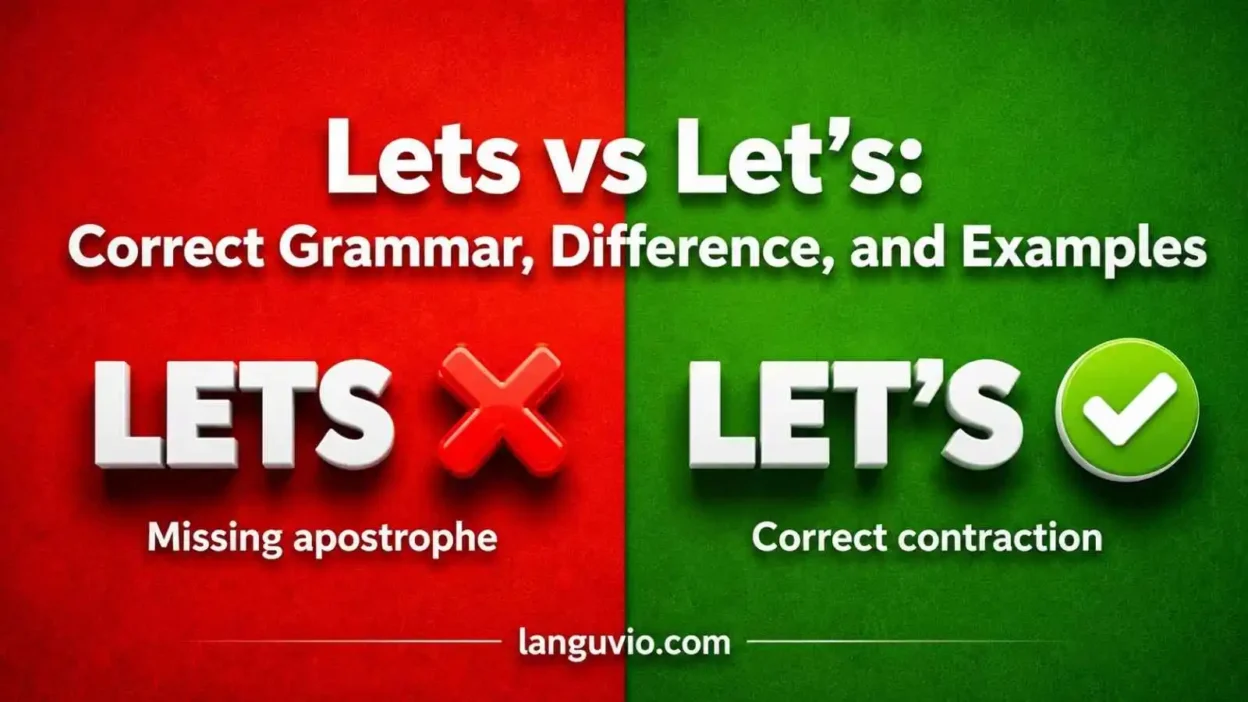
Lets vs let’s is a common word-choice problem because one small apostrophe changes the grammar. Lets means “allows” or “permits.” Let’s means “let us” and usually introduces a suggestion, plan, or shared action.
In speech, both forms sound almost the same. That makes the mistake easy to miss when you are writing quickly. However, the meaning is different, so the correct choice depends on what the sentence is doing.
Quick Answer
Use lets when the meaning is “allows.” It usually follows he, she, it, or a singular noun. Use let’s when you mean let us, especially before a suggestion or group action. The app lets you save files is correct. Let’s save the file now is also correct.
Why People Confuse Them
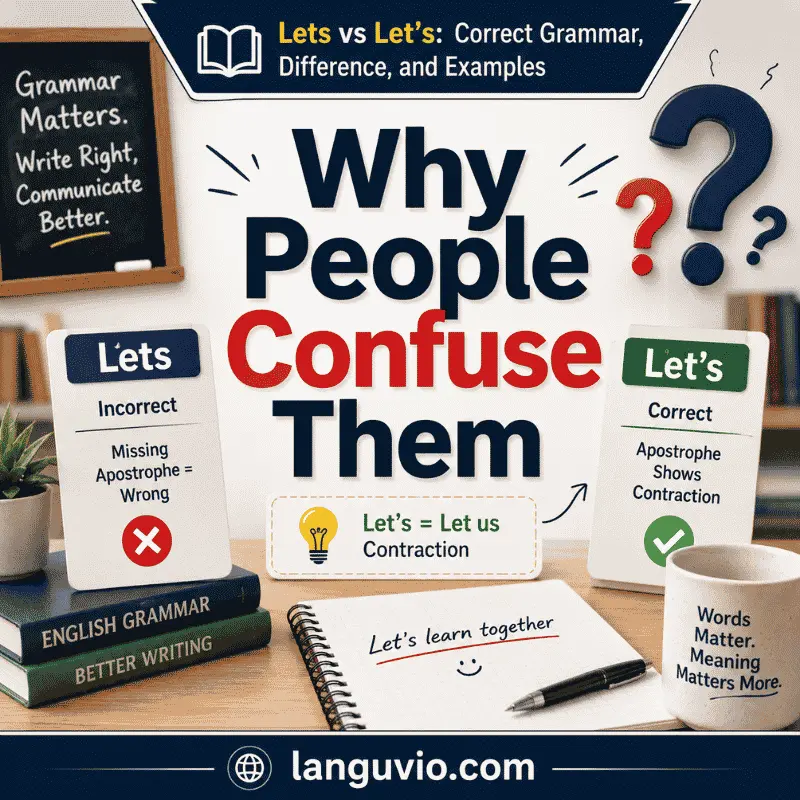
The confusion comes from two things: sound and spelling. Lets and let’s sound alike in everyday conversation, so the apostrophe only matters in writing.
Another reason is that both forms come from let. One is a verb form, while the other is a contraction. Because they look so close, writers often add or remove the apostrophe by habit instead of checking the meaning.
A simple test solves most cases. Replace the word with let us. If the sentence still works, choose let’s. When the meaning is “allows,” choose lets.
Key Differences At A Glance
| Context | Best Choice | Why |
| A person allows something | lets | “She lets her kids choose dinner on Fridays.” |
| A product allows something | lets | “The app lets you track expenses.” |
| A suggestion includes the speaker | let’s | “Let’s meet after work.” |
| A group plan starts with “let us” | let’s | “Let’s review the notes.” |
| A sentence has he, she, it, or one noun as the subject | lets | “The new policy lets employees work remotely.” |
| A sentence starts with a friendly suggestion | let’s | “Let’s call before we leave.” |
Meaning and Usage Difference
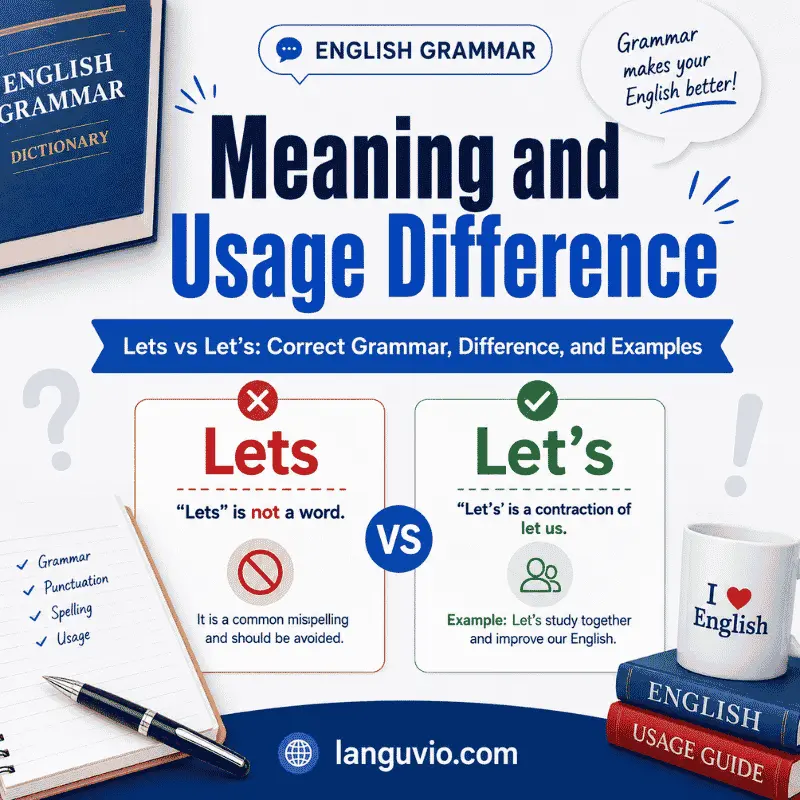
Lets is a present-tense verb form. It works with he, she, it, or a singular noun. In most everyday sentences, it means allows.
She lets the dog sleep on the couch.
This feature lets users change the font size.
The teacher lets students revise one essay.
Each sentence shows someone or something allowing an action.
Let’s is a contraction of let us. Writers use it before a base verb when they want to suggest something, start a plan, or invite someone into a shared action.
Correct examples:
Let’s
Let’s leave before traffic gets worse.
We should compare the two options.
We should not make the same mistake again.
These sentences do not mean “allows.” They mean “let us” or “we should.”
The pronunciation matters because the two forms usually sound the same: “lets.” For that reason, the right choice depends on grammar and meaning, not sound.
| Feature | lets | let’s |
| Main job | Verb meaning “allows” | Contraction meaning “let us” |
| Common pattern | Subject + lets + object/action | Let’s + base verb |
| Example | “This key lets you in.” | “Let’s go inside.” |
| Apostrophe | No apostrophe | Apostrophe replaces missing letters |
Tone, Context, and Formality
Lets is neutral. It fits casual writing, workplace writing, school writing, and instructions because it simply states what someone or something allows.
Examples:
The software lets teams share reports.
Our rule lets residents park overnight.
My manager lets me adjust my schedule.
Let’s sounds natural, direct, and friendly. You will see it in texts, emails, classroom directions, team chats, and everyday conversation.
Examples:
Let’s start with the main issue.
We can keep this simple.
After the meeting, we can talk.
For very formal writing, let us may sound more serious than let’s. In most modern US writing, though, let’s is normal when the tone is conversational.
Which One Should You Use?
Choose lets when a person, rule, product, feature, or situation allows something to happen.
Common subjects before lets include:
he
she
it
the app
the rule
the company
the teacher
the new feature
Examples:
The website lets customers update their address.
Her coach lets the team rest after practice.
This pass lets you enter the building.
Choose let’s when you are suggesting an action that includes you and at least one other person.
Common verbs after let’s include:
go
start
try
check
review
call
wait
remember
Examples:
Let’s
Let’s check the address before we drive.
We can try the free version first.
Maybe we should wait until Monday to decide.
When One Choice Sounds Wrong
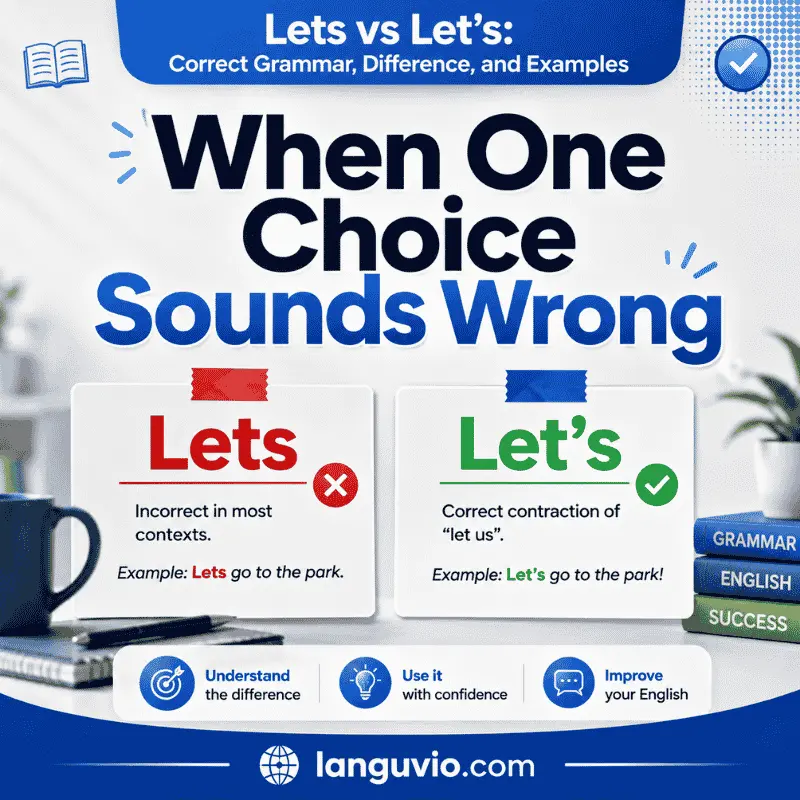
A common mistake is let’s you when the writer means allows you. In that structure, the correct form is lets you.
Wrong: This app let’s you edit photos.
Correct: This app lets you edit photos.
Wrong: The new plan let’s employees work from home.
Correct: The new plan lets employees work from home.
The reverse mistake also happens. Lets go is wrong when the sentence means let us go as a suggestion.
Wrong: Lets go to lunch.
Correct: Let’s go to lunch.
Wrong: Lets finish this tomorrow.
Correct: Let’s finish this tomorrow.
When the sentence means we should, let’s usually fits. When the sentence means allows, lets is the right choice.
Common Mistakes (and Quick Fixes)
Mistake 1: Adding an apostrophe before you
Wrong: This shortcut let’s you skip the menu.
Correct: This shortcut lets you skip the menu.
Quick fix: If the meaning is “allows you,” write lets you.
Mistake 2: Leaving out the apostrophe in a suggestion
Wrong: Lets meet at 6.
Correct: Let’s meet at 6.
Quick fix: If the sentence means “let us,” add the apostrophe.
Mistake 3: Treating the apostrophe as optional
Wrong: The update let’s users change passwords.
Correct: The update lets users change passwords.
Quick fix: An apostrophe belongs only in the contraction let’s.
Mistake 4: Trusting the sound instead of the meaning
Wrong: Lets take a break.
Correct: Let’s take a break.
Quick fix: Since both forms sound alike, read the sentence for meaning before choosing.
Everyday Examples
Lets examples:
The new camera lets you record in low light.
My landlord lets me pay rent online.
At this school, parents can choose email alerts because the system lets them update preferences.
This setting lets you turn off notifications.
Her dad lets her borrow the car on weekends.
A coupon like this lets customers save 20 percent.
Our office lets employees leave early before holidays.
With a code, the lock lets you open the door.
Let’s examples:
Let’s order pizza tonight.
Before we leave, let’s check the weather.
After dinner, let’s call Mom.
In the group chat, let’s not argue about this.
On Monday, let’s review the budget.
For now, let’s keep the first draft simple.
Near the main entrance is best, so let’s meet there.
Before editing, let’s save a copy.
Dictionary-Style Word Details
Verb
lets: This is a common verb form. It is the third-person singular present form of let, meaning “allows,” “permits,” or “makes possible.”
Example: This button lets you reset the page.
let’s: This is not a normal verb form by itself. It is a contraction of let us, and it usually appears before a base verb.
Example: Let’s reset the page.
Noun
lets: This form is rare as a noun in everyday US English. It can appear as the plural of let in limited contexts, such as sports or rental language, but that is not the common meaning in this comparison.
Example: The match had two lets.
let’s: This form is not used as a noun in standard US English. It functions as a contraction.
Synonyms
lets: Closest plain alternatives include allows, permits, enables, and makes possible. Clear opposites include blocks, prevents, and stops.
Example: The app allows users to upload photos.
let’s: Exact synonyms are limited because this form is a contraction, not a single meaning word. Closest plain alternatives include let us, we should, why don’t we, and we can. The negative form let’s not is often useful.
Example: Why don’t we start now?
Example Sentences
lets:
The pass lets visitors enter after 8 p.m.
Her schedule lets her work out before lunch.
This plan lets families choose a lower monthly payment.
The website lets users cancel their subscription online.
let’s:
Let’s enter through the side door.
Before lunch, let’s work out.
For the lower monthly payment, let’s choose the basic plan.
Before it renews, let’s cancel the subscription.
Word History
lets: This form comes from the verb let. For this comparison, the important point is simple: lets is the present-tense form used with a singular subject.
let’s: This form comes from let us. The apostrophe marks the shortened part of the phrase. Older meanings of let are not needed to choose correctly between lets and let’s in modern writing.
Phrases Containing
lets:
lets you
lets me
lets us
lets it happen
lets it slide
lets the team decide
let’s:
let’s go
let’s see
let’s start
let’s talk
let’s be honest
let’s not
let’s try again
FAQs
Is it lets or let’s?
Use lets when the meaning is “allows.” Use let’s when you mean “let us.” For example, The app lets you save files means the app allows you to save files. Let’s save the file now means let us save the file now.
Is “let’s go” correct?
Yes, let’s go is correct. It means let us go or we should go. The apostrophe is needed because let’s is a contraction. Lets go is incorrect when you are making a suggestion.
Is “lets you” or “let’s you” correct?
Lets you is correct when the meaning is “allows you.” For example, This feature lets you change your password is correct. Let’s you is usually wrong because let’s means let us, not allows.
Why does let’s have an apostrophe?
Let’s has an apostrophe because it is short for let us. The apostrophe shows that letters have been left out. This is the same basic idea as don’t for do not or we’re for we are.
Can lets mean allows?
Yes. Lets often means allows, permits, or makes possible. You can write, My teacher lets us revise our essays or The new rule lets employees work from home twice a week.
What is the easiest way to remember lets vs let’s?
Replace the word with let us. If the sentence still makes sense, use let’s. If allows makes more sense, use lets. For example, Let’s leave early means let us leave early, while This ticket lets you enter means this ticket allows you to enter.
Conclusion
The difference between lets and let’s is simple once you check the meaning. Lets means allows and usually follows a singular subject. Let’s means let us and introduces a suggestion, plan, or shared action.
Use lets when the meaning is “allows.” Use let’s when you mean “let us.” For example, The app lets you save files means the app allows you to save files. Let’s save the file now means let us save the file now.
Yes, let’s go is correct. It means let us go or we should go. The apostrophe is needed because let’s is a contraction. Lets go is incorrect when you are making a suggestion.
Lets you is correct when the meaning is “allows you.” For example, This feature lets you change your password is correct. Let’s you is usually wrong because let’s means let us, not allows.
Let’s has an apostrophe because it is short for let us. The apostrophe shows that letters have been left out. This is the same basic idea as don’t for do not or we’re for we are.
Yes. Lets often means allows, permits, or makes possible. You can write, My teacher lets us revise our essays or The new rule lets employees work from home twice a week.
Replace the word with let us. If the sentence still makes sense, use let’s. If allows makes more sense, use lets. For example, Let’s leave early means let us leave early, while This ticket lets you enter means this ticket allows you to enter.