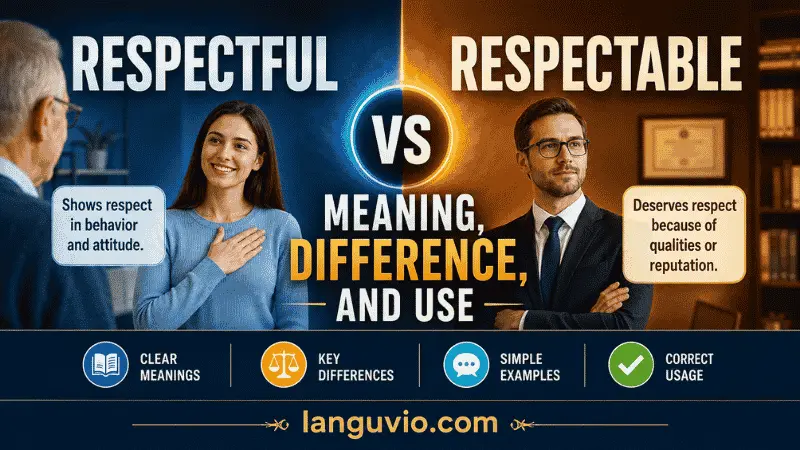
The choice between respectful vs respectable depends on what you want to describe. Both words are standard adjectives, and both relate to respect. However, they point in different directions.
Use respectful for behavior, language, or attitudes that show consideration toward someone or something. Use respectable for a person, reputation, appearance, amount, or result that deserves approval or reaches a decent standard.
Quick Answer
Both words are correct, but they are not interchangeable.
Respectful means showing respect:
“She gave a respectful reply.”
Respectable usually means worthy of respect, socially proper, presentable, or fairly good:
“He built a respectable career.”
“The team earned a respectable score.”
A simple memory aid is: respectful behavior shows respect; something respectable deserves approval or meets a solid standard.
Why People Confuse Them
The words begin with the same base and work as adjectives. They can also describe the same person from different angles.
A manager may be respectful because she listens carefully to employees. She may be respectable because she has an honest record and a good reputation.
One word describes how she treats others. The other evaluates her character, standing, or quality.
Key Differences At A Glance
- Respectful: focuses on courtesy, consideration, and behavior toward others.
- Respectable: focuses on worthiness, reputation, proper appearance, or an acceptable level of quality or quantity.
- Shared point: both are adjectives, but they answer different questions: “Does it show respect?” versus “Is it worthy, proper, or fairly good?”
Meaning and Usage Difference
Respectful describes conduct that expresses respect. Common patterns include respectful of, respectful toward, and respectful to.
In American English, it naturally modifies words such as tone, response, behavior, discussion, and silence.
Respectable has a broader range. It can describe someone with a good character or reputation, something presentable or socially proper, or a result that is fairly good without being outstanding.
A respectable income, score, crowd, or performance is solid or substantial.
Tone, Context, and Formality
Both adjectives work in everyday and professional English.
Respectful often sounds positive and behavior-focused. It fits workplace rules, classroom conduct, online discussions, disagreements, and personal boundaries.
Respectable can sound approving, but its strength depends on context. A respectable citizen receives clear praise. A respectable test score may mean merely decent.
In some social contexts, the word can also suggest conventional standards of proper behavior or appearance.
Which One Should You Use?
| Context | Best Choice | Why |
| Polite conduct toward another person | respectful | The behavior shows consideration |
| A person with an honorable reputation | respectable | The person is considered worthy of respect |
| A calm disagreement | respectful | The speakers treat each other properly |
| A fairly good salary or result | respectable | The amount or quality reaches a solid level |
| Neat clothing suitable for an event | respectable | The appearance is presentable or proper |
Choose respectful when the sentence asks how someone treats others.
Choose respectable when it asks how others may judge a person, thing, appearance, amount, or result.
When One Choice Sounds Wrong
“Please use a respectable tone” sounds wrong when you mean polite or considerate. A tone shows respect, so respectful tone is the natural choice.
“She received a respectful salary” also sounds wrong. A salary does not show courtesy. A respectable salary is a reasonably good or substantial salary.
Some nouns allow either adjective, but the meaning changes.
Respectful behavior shows regard for others. Respectable behavior meets accepted standards and does not harm a person’s reputation.
Common Mistakes (and Quick Fixes)
Mistake: “The students were respectable toward the guest speaker.”
Fix: “The students were respectful toward the guest speaker.”
Mistake: “She earns a respectful income.”
Fix: “She earns a respectable income.”
Mistake: assuming respectable always means highly admirable.
Fix: Check the noun. With score, amount, or performance, respectable often means fairly good rather than exceptional.
Everyday Examples
- The customer remained respectful even while requesting a refund.
- Our neighbors are quiet, responsible, and respectable.
- The candidates had a firm but respectful debate.
- The small business posted a respectable profit in its first year.
- Please remain respectful of other people’s privacy.
- He changed into something more respectable before the interview.
Dictionary-Style Word Details
Verb
Respectful: Not commonly used as a verb in standard US English.
Respectable: Not commonly used as a verb in standard US English.
Noun
Respectful: Not commonly used as a noun. The usual related noun is respectfulness.
Respectable: Not commonly used as a noun in ordinary modern US English. The usual related noun is respectability.
Synonyms
Respectful: Closest plain alternatives include courteous, considerate, polite, and deferential. A clear antonym is disrespectful.
Respectable: Alternatives depend on the sense. For reputation, use reputable, honorable, or decent. For quality or amount, solid or fairly good may fit. A common antonym is disreputable.
Example Sentences
Respectful: “Her email was direct but respectful.” “The visitors kept a respectful distance from the memorial.”
Respectable: “The contractor has a respectable record.” “They attracted a respectable crowd for a weekday event.”
Word History
Both words have been recorded in English since the late 1500s.
Respectful combines respect with a suffix that suggests being characterized by respect.
Respectable combines respect with a suffix associated with being worthy or capable of receiving respect. Its later meanings expanded to include proper appearance and fairly good quality or quantity.
Phrases Containing
Respectful: respectful of others; respectful toward staff; respectful tone; respectful disagreement; respectful silence.
Respectable: respectable person; respectable reputation; respectable amount; respectable score; look respectable.
FAQs
Yes, both are standard adjectives, but each expresses a different idea. Respectful describes conduct that shows regard for someone or something. Respectable describes a person or thing considered worthy, proper, presentable, substantial, or fairly good, depending on the noun.
Yes. Someone may speak politely and treat others with consideration while still having a poor reputation or acting dishonestly in other areas. In that case, the person’s immediate behavior is respectful, but observers may not consider the person respectable overall.
Both phrases can work, but they do not mean the same thing. Respectful behavior shows courtesy toward others. Respectable behavior meets accepted standards of decency or propriety. In most instructions about manners, workplace conduct, or classroom conduct, respectful behavior is the intended phrase.
No. A respectable salary is reasonably good, substantial, or appropriate for the work. A respectful salary is usually incorrect because a salary cannot show courtesy. However, an employer may offer fair pay in a respectful manner or maintain respectful treatment during salary discussions.
Respectful fits a polite disagreement because it describes how people communicate while holding different views. A respectful disagreement may still be direct or firm, but the speakers listen, avoid personal attacks, and recognize each other’s right to express an opinion.
No. Respectable can offer strong praise when it refers to honorable character or a good reputation. With an amount, score, profit, or performance, it often means solid or fairly good rather than excellent. The noun and surrounding context determine the strength.
Conclusion
Use respectful for words, actions, and attitudes that show respect. Use respectable for people or things that deserve approval, appear proper, or reach a decent level.
The quickest test is to ask what the sentence emphasizes. If it focuses on treatment of others, choose respectful. If it evaluates reputation, appearance, amount, or quality, choose respectable.