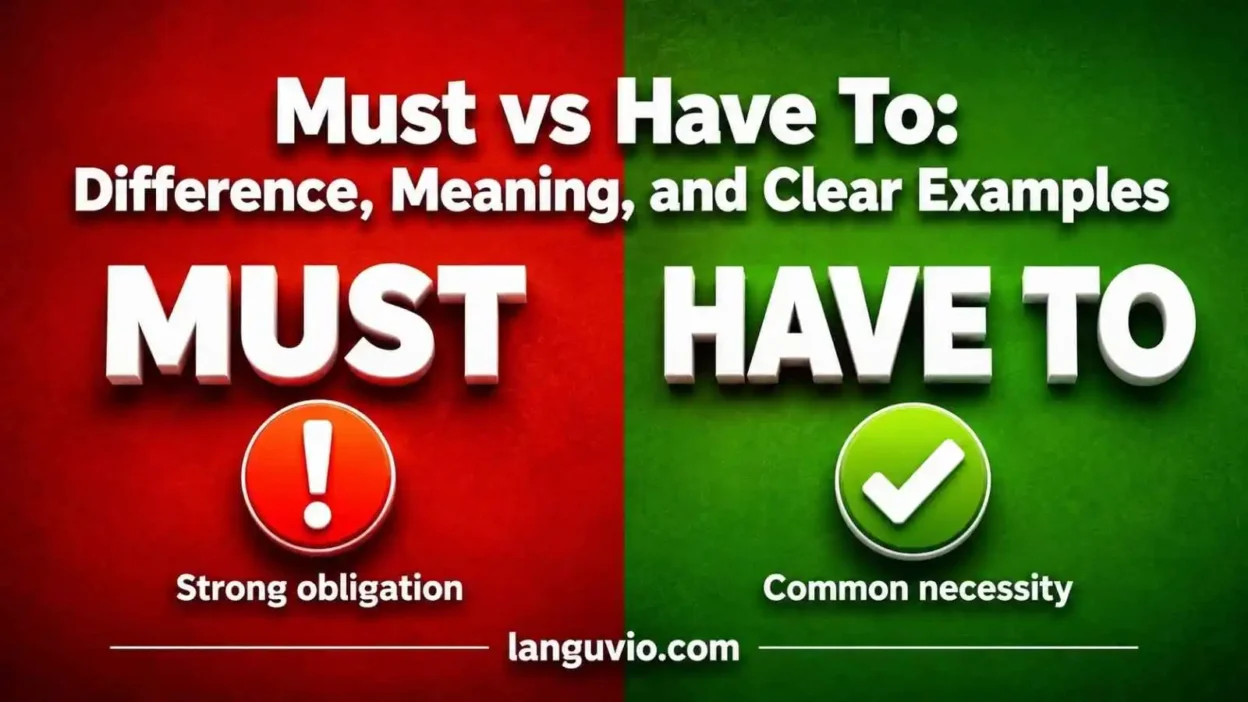
Must vs have to can be confusing because both phrases show that something is necessary. In many sentences, they seem close in meaning. For example, “I must leave now” and “I have to leave now” can both be correct.
However, the difference usually comes down to grammar, tone, and context. Must often sounds stronger, more serious, or more formal. Have to, on the other hand, sounds more natural in everyday American speech, especially when the need comes from a rule, schedule, deadline, or outside situation.
Quick Answer
Both must and have to are correct. Use must for strong necessity, formal rules, serious advice, or something the speaker strongly feels is required. Use have to for everyday duties, outside requirements, routines, questions, past forms, and future forms. In most casual US situations, have to is the safer choice.
Why People Confuse Them
People confuse must and have to because both can express obligation. In simple present-tense sentences, the meaning often overlaps.
For example, these two sentences are both possible:
I must finish this report today.
I have to finish this report today.
Although both sentences mean the report needs to be finished, the tone is not exactly the same. Must sounds more serious or speaker-driven. Have to sounds more like a normal duty, deadline, or outside requirement.
The confusion becomes stronger with negative forms. Must not means something is not allowed. In contrast, don’t have to means something is not necessary.
Key Differences At A Glance
| Context | Best Choice | Why |
| Strong personal decision | must | It sounds serious and speaker-driven. |
| Outside rule or requirement | have to | It often points to a rule, schedule, or situation. |
| Everyday conversation | have to | It sounds more natural in common US speech. |
| Formal notice or instruction | must | It sounds direct and official. |
| Past obligation | have to | Use had to, not must. |
| Future obligation | have to | Use will have to, not will must. |
| Question about obligation | have to | Do I have to sounds more natural than Must I. |
| Prohibition | must not | It means something is not allowed. |
| No obligation | don’t have to | It means something is optional. |
Meaning and Usage Difference
Must is a modal verb. It comes before the base form of another verb. Because of that, it does not take to, -s, or -ed.
Clear examples:
You must bring your ID.
She must finish the form.
They must arrive before noon.
In formal or serious contexts, must works well. It often appears in rules, warnings, instructions, and strong personal statements.
More examples:
Applicants must submit the form by Friday.
Visitors must check in at the front desk.
I must call my doctor today.
Have to is a verb phrase that also shows necessity or obligation. Unlike must, it changes form depending on the subject and tense.
Clear examples:
I have to leave early.
She has to leave early.
We had to leave early yesterday.
They will have to leave early tomorrow.
Because it changes form easily, have to works well for everyday speech, past obligations, future obligations, and questions.
Tone, Context, and Formality
Must often sounds stronger than have to. As a result, it can sound urgent, serious, formal, or official.
For example:
All visitors must check in at the front desk.
Employees must wash their hands before returning to work.
Drivers must stop at a red light.
Meanwhile, have to often sounds more natural in everyday American English. It fits common situations such as work, school, errands, family duties, and appointments.
For example:
I have to pick up the kids at 3.
We have to be at the airport by noon.
She has to work late tonight.
This does not mean must is wrong in conversation. However, it can sound more intense than needed. In casual speech, “I have to go now” usually sounds more natural than “I must go now.”
Which One Should You Use?
Choose have to when you want the most natural everyday wording. It works well for normal duties, schedules, appointments, work tasks, school rules, and deadlines.
Examples:
I have to join a meeting in ten minutes.
My son has to finish his homework first.
We have to leave before traffic gets bad.
Choose must when the sentence needs a stronger or more official tone. It is useful for rules, warnings, serious advice, and firm requirements.
Examples:
You must follow the posted safety rules.
Students must bring a photo ID.
I must be honest with you.
In short, have to is often best for normal conversation. However, must is better when the sentence needs extra force, seriousness, or formality.
When One Choice Sounds Wrong
Sometimes both choices are possible. In other cases, one choice sounds clearly wrong because of tense, sentence structure, or meaning.
Better: Yesterday, I had to call the office.
Wrong: Yesterday, I must call the office.
Better: Tomorrow, we will have to leave early.
Wrong: Tomorrow, we will must leave early.
Better: Does she have to attend the meeting?
Wrong: Does she must attend the meeting?
Better: She must finish the form.
Wrong: She musts finish the form.
Better: I don’t have to pay today.
Wrong: I don’t must pay today.
The negative forms need special care. Must not means something is forbidden. However, don’t have to means something is optional.
You must not park here.
Meaning: Parking here is not allowed.
You don’t have to park here.
Meaning: You may park somewhere else.
Because these meanings are different, the two forms should not be treated as direct opposites.
Common Mistakes (and Quick Fixes)
Mistake: I must to leave now.
Fix: I must leave now.
Mistake: She musts submit the file.
Fix: She must submit the file.
Mistake: He have to renew his card.
Fix: He has to renew his card.
Mistake: Did you must pay a fee?
Fix: Did you have to pay a fee?
Mistake: We will must arrive early.
Fix: We will have to arrive early.
Mistake: I musted work late.
Fix: I had to work late.
Mistake: You don’t have to smoke here.
Fix, if you mean it is forbidden: You must not smoke here.
Mistake: You must not bring anything; we have extra supplies.
Fix, if you mean it is optional: You don’t have to bring anything; we have extra supplies.
Everyday Examples
I have to get gas before work.
Before I forget, I must call Mom tonight.
We have to show our tickets at the door.
At this venue, guests must show a ticket before entering.
She has to take two classes this semester.
To graduate, she must pass the final exam.
Do I have to fill out this section?
In a formal setting, someone might ask, “Must I answer that question?”
They had to cancel the trip because of the storm.
Now, they will have to reschedule it.
You don’t have to stay after the meeting.
However, you must not share the password.
This month, I have to be careful with my budget.
Also, I must say, that was a great presentation.
Drivers often have to carry insurance.
In addition, drivers must obey posted speed limits.
Dictionary-Style Word Details
Verb
Must: Must is a modal verb. It comes before the base form of another verb. It does not take -s, -ed, or to after it.
Examples:
She must wait.
They must apply online.
You must bring your badge.
Have to: Have to is a verb phrase. The word have changes with the subject and tense.
Examples:
I have to wait.
She has to wait.
They had to wait.
We will have to wait.
Noun
Must: Must can also work as a noun meaning something necessary or highly recommended.
Example: A valid ID is a must for check-in.
Have to: Have to is not commonly used as a noun in standard US English. It usually works as a verb phrase.
Example: “A have-to” may appear informally to mean a required task, but it is not the normal choice in clear formal writing.
Synonyms
Must: Closest plain alternatives include need to, be required to, be obligated to, and have to. However, these do not always carry the same strong or formal tone.
Have to: Closest plain alternatives include need to, be required to, be supposed to, and must. Even so, the tone may change depending on the sentence.
For must not, possible opposites include may, can, or be allowed to, depending on the meaning.
For don’t have to, possible opposites include must, have to, or need to.
Example Sentences
Must:
You must bring your badge to enter the building.
I must finish this before I leave.
Students must not use phones during the test.
Have to:
I have to bring my laptop to work.
She has to leave by 6.
We had to wait outside for twenty minutes.
You don’t have to answer every question.
Word History
Must: Must has long been used in English as a modal verb for necessity, obligation, or strong likelihood. For today’s usage, the most important point is its strong and direct tone.
Have to: Have to comes from the ordinary verb have plus to. In modern English, it works as a flexible way to show obligation, especially in everyday speech.
Phrases Containing
Must:
must be
must have
must not
must-see
must-have
must-do
Have to:
have to go
have to be
has to work
had to leave
will have to wait
don’t have to
doesn’t have to
FAQs
Is must stronger than have to?
Yes, must often sounds stronger than have to. It can feel more serious, direct, or formal. For example, “You must follow the rules” sounds stricter than “You have to follow the rules.”
Are must and have to the same?
They are close, but not always the same. Must often shows a strong rule or the speaker’s opinion. Have to often shows an outside need, schedule, or situation.
Which is more common in American English?
In everyday American English, have to is usually more common and natural. People often say, “I have to go,” “She has to work,” or “We have to leave soon.” Meanwhile, must is more common in formal rules, signs, notices, and strong advice.
Can I use must in the past tense?
No, must does not have a normal past-tense form for obligation. Instead, use had to. For example, say “I had to work late yesterday,” not “I musted work late.”
Can I use must for the future?
Usually, use will have to for future obligation. For example, “We will have to arrive early tomorrow” is correct. Do not say “We will must arrive early.”
What is the difference between must not and don’t have to?
Must not means something is forbidden. For example, “You must not park here” means parking is not allowed.
Don’t have to means something is not necessary. For example, “You don’t have to park here” means you can park somewhere else.
Which one should beginners use?
Beginners can safely use have to in most everyday situations. However, they should use must for strong rules, warnings, and formal instructions.
Conclusion
Must vs have to is not a choice between correct and incorrect. Both forms are standard, but they do not always sound the same.
Use must for strong necessity, formal rules, serious advice, and direct instructions. Use have to for everyday duties, outside requirements, questions, past obligations, and future obligations. Most importantly, remember the negative forms: must not means “not allowed,” while don’t have to means “not necessary.”
Yes, must often sounds stronger than have to. It can feel more serious, direct, or formal. For example, “You must follow the rules” sounds stricter than “You have to follow the rules.”
They are close, but not always the same. Must often shows a strong rule or the speaker’s opinion. Have to often shows an outside need, schedule, or situation.
In everyday American English, have to is usually more common and natural. People often say, “I have to go,” “She has to work,” or “We have to leave soon.” Meanwhile, must is more common in formal rules, signs, notices, and strong advice.
No, must does not have a normal past-tense form for obligation. Instead, use had to. For example, say “I had to work late yesterday,” not “I musted work late.”
Usually, use will have to for future obligation. For example, “We will have to arrive early tomorrow” is correct. Do not say “We will must arrive early.”
Must not means something is forbidden. For example, “You must not park here” means parking is not allowed.
Don’t have to means something is not necessary. For example, “You don’t have to park here” means you can park somewhere else.
Beginners can safely use have to in most everyday situations. However, they should use must for strong rules, warnings, and formal instructions.