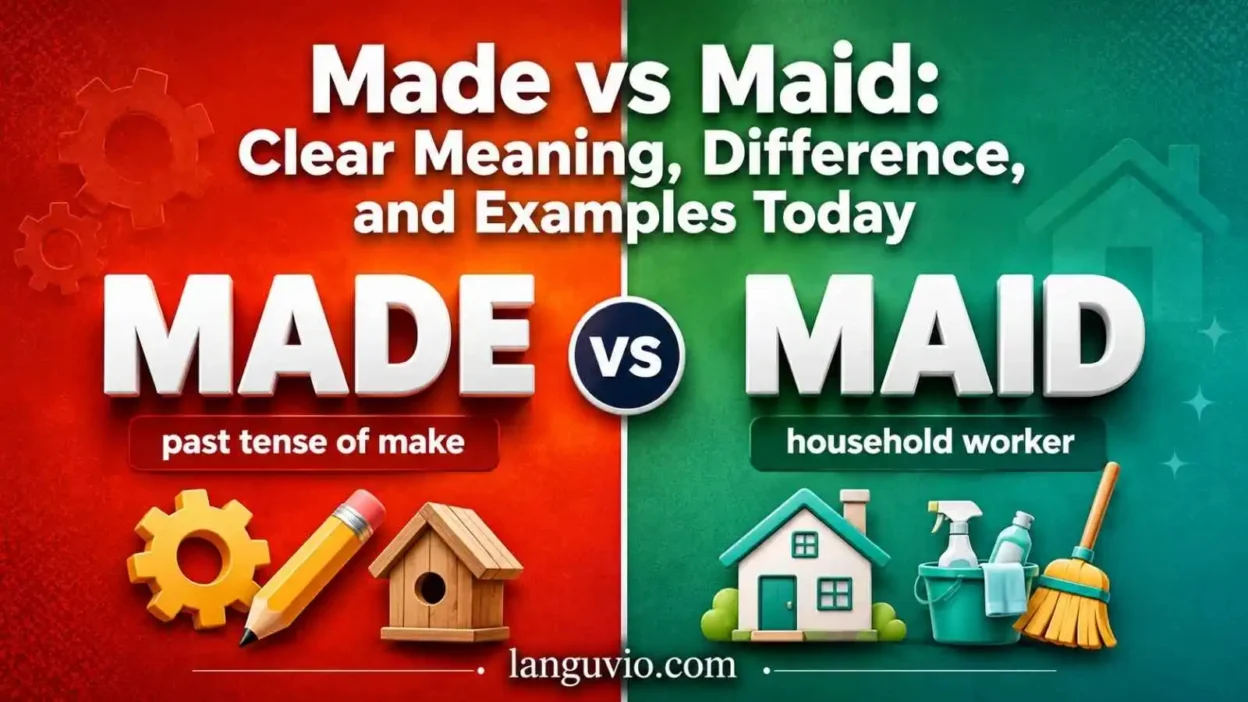
Made vs maid is a simple word-choice problem with one main cause: the two words sound the same. In writing, though, they mean very different things.
Made is connected to the verb make. Maid is a noun for a person, usually a female domestic worker or cleaner. Because they are homophones, spell-check may not always catch the mistake if the sentence still looks possible.
The good news is that the difference is easy to remember once you connect each word to its job in the sentence.
Quick Answer
Use made when you mean created, produced, prepared, caused, or completed.
Use maid when you mean a domestic worker, hotel cleaner, housekeeper, or, in older writing, a young unmarried woman.
Correct:
She made dinner before the guests arrived.
Correct:
The hotel maid left fresh towels in the room.
Not correct:
She maid dinner before the guests arrived.
Not correct:
The hotel made cleaned the room.
Why People Confuse Them
Made and maid are pronounced the same way: “mayd.” That shared sound is the whole reason people mix them up.
They are not different spellings of the same word. They are separate words with separate meanings.
Another reason for confusion is that both words can appear in household contexts. Someone can make a bed, and a maid can also make a bed as part of a job. Still, the words do different work:
• Made tells what happened.
• Maid names a person.
That one difference solves most mistakes.
Key Differences At A Glance
• Made: an action or result from make
• Maid: a person, usually a domestic worker
• Made: often follows a subject, as in “She made…”
• Maid: often follows words like the, a, hotel, house, or service
• Made: common in everyday speech and writing
• Maid: understandable, but sometimes less neutral than housekeeper or cleaner in modern US usage
Meaning and Usage Difference
Made is the past tense and past participle of make. It can mean created, built, prepared, caused, or completed.
Examples:
I made coffee.
They made a plan.
The chair was made by hand.
That comment made everyone laugh.
Made can also work like an adjective in words and phrases such as well-made, handmade, custom-made, ready-made, and self-made.
Maid is a noun. In modern use, it usually means a woman or girl employed to clean, serve, or do domestic work in a home, hotel, or similar place.
Examples:
The maid cleaned the room.
A hotel maid brought extra towels.
The story is about a maid working in a large house.
Maid can also mean a young unmarried woman in older, literary, or historical writing. That meaning is not common in normal modern US conversation.
Tone, Context, and Formality
Made is neutral. You can use it in casual writing, school writing, business writing, emails, stories, and instructions.
Maid is also a standard word, but context matters. In everyday US English, maid can sound old-fashioned, gendered, or class-based when referring to a cleaning worker. Many people now prefer housekeeper, cleaner, house cleaner, room attendant, or cleaning professional, depending on the setting.
That does not mean maid is always wrong. It is still common in phrases like hotel maid, maid service, and maid of honor. However, if you are writing for a workplace, business, or service page, housekeeper or cleaner may sound more respectful and modern.
Which One Should You Use?
| Context | Best Choice | Why |
| Talking about creating something | Made | It is the past form of make. |
| Talking about preparing food | Made | Food is made, cooked, or prepared. |
| Talking about building or producing something | Made | It shows something was created or manufactured. |
| Talking about a cleaning worker | Maid | It names a person who does domestic work. |
| Writing about a hotel worker | Maid or housekeeper | Maid is understood, but housekeeper may sound more modern. |
| Writing formal workplace copy | Housekeeper or cleaner | These are often more neutral than maid. |
| Talking about a wedding role | Maid | Maid of honor is the fixed phrase. |
| Describing an old story or historical scene | Maid | It can fit older or literary settings. |
When One Choice Sounds Wrong
Made sounds wrong when the sentence needs a person.
Wrong:
The made cleaned the bathroom.
Correct:
The maid cleaned the bathroom.
Maid sounds wrong when the sentence needs an action.
Wrong:
He maid a promise.
Correct:
He made a promise.
The fastest test is this: can you replace the word with created, prepared, or caused? If yes, use made.
She made a cake.
She created a cake.
That works.
Can you replace it with housekeeper or cleaner? If yes, maid may fit.
The maid cleaned the room.
The housekeeper cleaned the room.
That works too.
Common Mistakes (and Quick Fixes)
Mistake:
She maid breakfast.
Fix:
She made breakfast.
Why:
Breakfast was prepared, so you need made.
Mistake:
The made changed the sheets.
Fix:
The maid changed the sheets.
Why:
The sentence refers to a person, so you need maid.
Mistake:
This table was maid of oak.
Fix:
This table was made of oak.
Why:
The table was created from material, so use made.
Mistake:
The maid a mistake.
Fix:
She made a mistake.
Why:
Made a mistake is the correct phrase. Maid cannot work as the action word here.
Mistake:
We hired a made for the apartment.
Fix:
We hired a maid for the apartment.
Better in many modern contexts:
We hired a cleaner for the apartment.
Why:
The sentence names a worker, not an action.
Everyday Examples
I made a sandwich before leaving for work.
The maid knocked before entering the hotel room.
My brother made a shelf for the garage.
The maid service comes every other Friday.
She made a list of groceries.
The family hired a housekeeper instead of using the word maid in the job post.
The dress was custom-made for the event.
The maid of honor gave a short speech at the wedding.
That joke made everyone laugh.
The old novel describes a maid working in a wealthy household.
Dictionary-Style Word Details
Verb
Made: Commonly used as a verb form. It is the past tense and past participle of make.
Example:
She made a great first impression.
Maid: Not commonly used as a verb in standard US English. In normal writing, maid is a noun.
Example:
The maid cleaned the room.
Noun
Made: Not commonly used as a noun in standard US English. It usually works as a verb form or adjective.
Example:
The chair was made in Vermont.
Maid: A noun meaning a female domestic worker, hotel cleaner, house servant, or, in older writing, a young unmarried woman.
Example:
The maid replaced the towels.
Synonyms
Made: closest plain alternatives include created, built, produced, prepared, formed, caused, and completed. The best choice depends on the sentence.
Examples:
She made dinner.
She prepared dinner.
They made a new design.
They created a new design.
Maid: closest plain alternatives include housekeeper, cleaner, house cleaner, room attendant, domestic worker, and household helper. Some choices sound more modern or more formal than others.
Examples:
The maid cleaned the room.
The housekeeper cleaned the room.
Clear antonyms do not work neatly for either word in every context. For made, an opposite may be destroyed, unmade, or dismantled in some sentences. For maid, there is no single true opposite.
Example Sentences
Made:
I made coffee before the meeting.
The company made a safer version of the product.
Her answer made sense.
The quilt was handmade by her grandmother.
We made plans for Saturday.
Maid:
The maid left clean towels by the sink.
A maid service cleaned the apartment before move-in day.
The hotel maid reported the broken lamp.
In the old story, a maid carried a letter to the queen.
The maid of honor helped organize the bridal shower.
Word History
Made: Made comes from make as its past tense and past participle. Its history is tied to the verb make, which has long been used for creating, forming, causing, preparing, and doing things.
Maid: Maid is historically connected to maiden. Its older meaning referred to a young unmarried woman. Over time, the word also became associated with female domestic service. In modern everyday use, the domestic-worker meaning is much more common than the old literary meaning.
Phrases Containing
Made:
made of
made from
made with
made in
made up
made by hand
well-made
handmade
custom-made
ready-made
self-made
made a mistake
made a promise
made sense
Maid:
hotel maid
housemaid
maid service
maid of honor
lady’s maid
maidservant
chambermaid
meter maid
old maid
Use care with older phrases. Some are still common, such as maid of honor. Others may sound dated, historical, or harsh depending on the audience.
FAQs
Use made when you mean created, prepared, built, caused, or completed. Use maid when you mean a domestic worker, housekeeper, hotel cleaner, or the wedding role in maid of honor.
Made is the past tense and past participle of make. Maid is a noun that refers to a person, usually someone who cleans or does domestic work. They sound the same, but they have different meanings.
The correct sentence is “She made dinner.” Dinner was prepared, so you need made. Maid cannot be used as a verb in this sentence.
Sometimes. Maid is still understood, especially in phrases like hotel maid, maid service, and maid of honor. However, in many modern US contexts, housekeeper, cleaner, or room attendant may sound more neutral and respectful.
Examples:
She made coffee before work.
The table was made of wood.
He made a promise to call later.
That movie made me laugh.
The jacket was custom-made.
Examples:
The maid cleaned the hotel room.
A maid service comes every Friday.
The maid of honor gave a speech.
The family hired a housekeeper instead of using the word maid.
In the old story, a maid worked in the castle.
No. The correct phrase is “made a mistake.” Since the phrase refers to doing or causing something, you need made, not maid.
Remember this simple trick: made belongs with make, and maid names a worker. If the sentence is about creating, preparing, or doing something, use made. If it is about a person, use maid.
Conclusion
Made and maid sound alike, but they are not interchangeable.
Made is the word for an action or result connected to make: created, prepared, caused, built, or completed.
Maid is the word for a person, usually a domestic worker or cleaner, and it also appears in fixed phrases such as maid of honor.
The easiest memory trick is simple: made belongs with make, and maid names a worker.