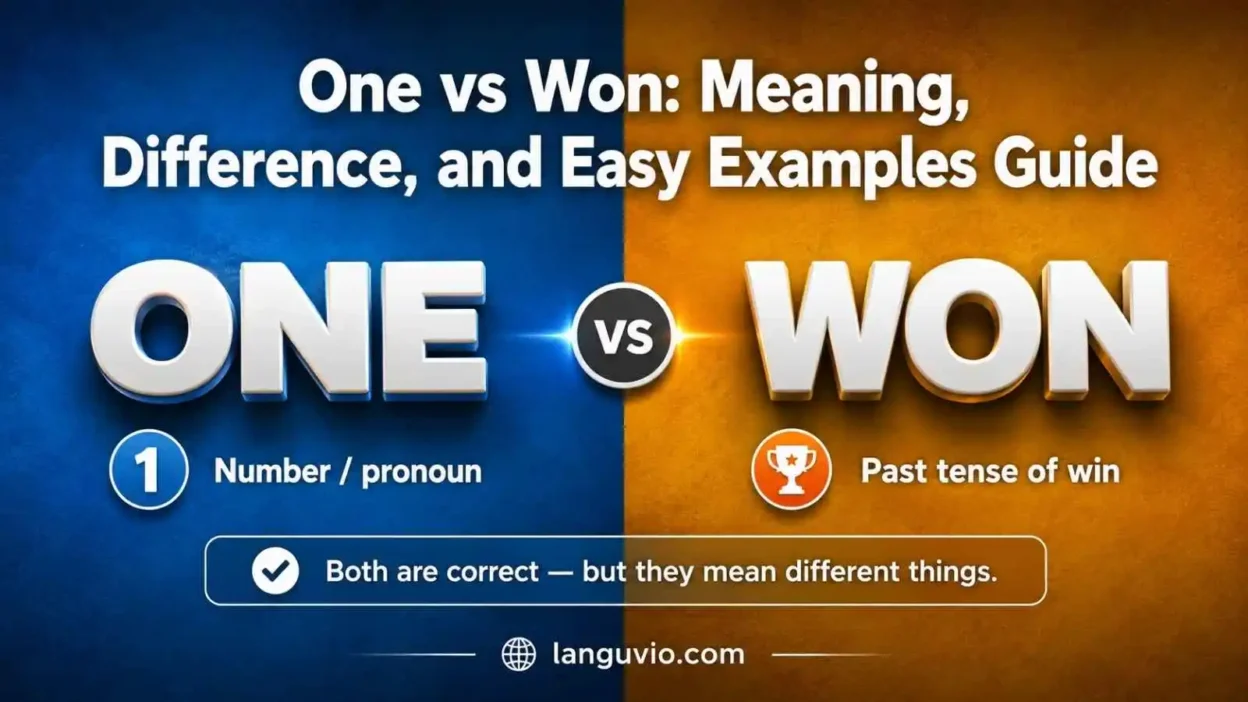
One vs won is a common English mistake because both words sound the same in American English. Their meanings, however, are completely different.
One usually refers to the number 1, a single person, or a single thing. Won is the past tense and past participle of win.
Correct: I need one ticket.
Correct: Our team won the game.
The confusion usually appears in writing, not speaking. When people hear the word, context helps them understand the meaning. On the page, the spelling must be correct.
Quick Answer
Use one when you mean the number 1, a single item, or a specific person or thing.
Example: She bought one coffee before class.
Use won when you mean “was victorious” or “got something by winning.”
Example: She won the school election.
Here is the easiest rule:
One = number or single thing.
Won = past form of win.
These words are not interchangeable.
Why People Confuse Them
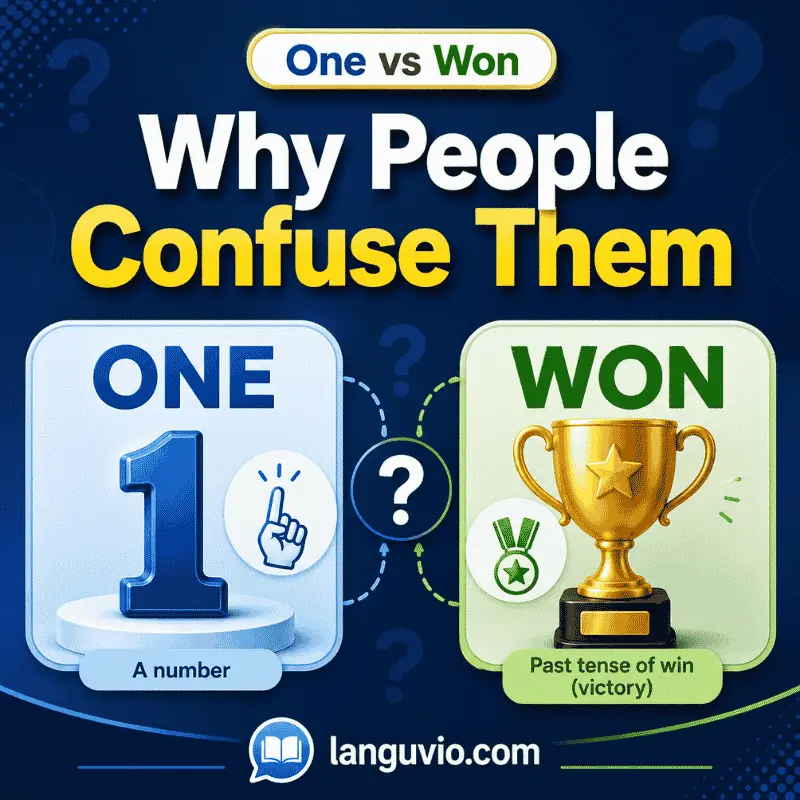
People confuse one and won because they are homophones. A homophone is a word that sounds the same as another word but has a different spelling and meaning.
In normal American speech, both words sound like wun. Because the sound does not change, your ear cannot always tell you which spelling to use.
Context gives you the answer.
If the sentence is about a number, amount, choice, or single thing, choose one.
Example: I saved one seat for you.
When the sentence is about victory, success, or earning something through competition, choose won.
Example: I won a gift card at the event.
Key Differences At A Glance
| Context | Best Choice | Why |
| A number or amount | one | It means the number 1. |
| A single person or thing | one | It points to one item, person, or choice. |
| A pronoun replacing a noun | one | It can stand in for a noun already understood. |
| A game, race, award, or election | won | It is the past form of win. |
| A success already achieved | won | It shows that victory happened in the past. |
| Korean currency | won | It can name the money used in North Korea or South Korea. |
Meaning and Usage Difference
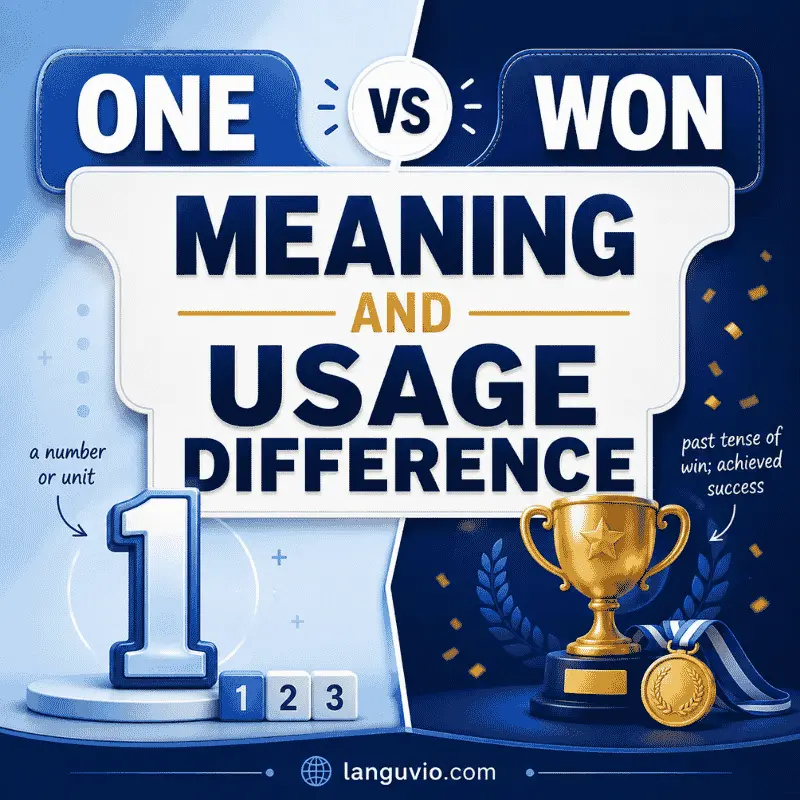
One is mostly connected to number, identity, or a single item.
You can use one as the written form of the number 1.
Example: I have one meeting left today.
It can also come before a noun to mean a single or particular thing.
Example: We found one open table near the window.
Sometimes, one replaces a noun that is already clear from the sentence.
Example: I like the blue jacket, but the black one is cheaper.
Won has a different job. It is the past tense and past participle of win.
Example: The runner won by three seconds.
Another common structure is have won, has won, or had won.
Example: They have won five games this season.
There is also a separate noun won, which means the currency used in North Korea and South Korea. That meaning is real, but it is not the main reason most writers mix up one and won.
Example: The price was listed in won.
For everyday writing, remember this simple difference: one counts, while won shows winning.
Tone, Context, and Formality
The choice between one and won is based on meaning, not formality.
One sounds natural when it refers to the number 1.
Example: Please bring one photo ID.
It can sound more formal when it means “a person in general.”
Example: One should always check the deadline before applying.
That sentence is correct, but many US readers would find this version more natural:
Example: You should always check the deadline before applying.
So, one can be formal in some general statements, especially when it replaces “a person” or “you.” In number-based sentences, it is completely normal.
Won is neutral. It fits naturally in sports, school, business, politics, games, contests, and awards.
Example: The company won the contract.
Another natural use appears when someone earns support, praise, or trust.
Example: Her speech won the audience’s attention.
Which One Should You Use?
Choose one when the sentence is about a number, a single item, or a specific person or thing.
Use one when the sentence is about a number, a single item, or a specific person or thing.
Examples:
• I ordered one sandwich.
• This is the one I wanted.
• She is one of our best players.
Use won when the sentence is about winning, earning, or gaining something through success.
Examples:
• They won the final round.
• He won a scholarship.
• The proposal won support from the board.
Choose won when the sentence is about winning.
Use won when the sentence describes a past victory, award, prize, or success.
Correct: They won the final round.
He also won a scholarship.
In a business context, the proposal won support from the board.
A quick test can help. Try replacing the word with two. If the sentence still works as a number idea, one is probably correct.
I need one copy.
I need two copies.
That test works because the sentence is about quantity.
For won, try replacing the word with was victorious or earned by winning.
Our team won.
Our team was victorious.
That meaning fits, so won is correct.
When One Choice Sounds Wrong
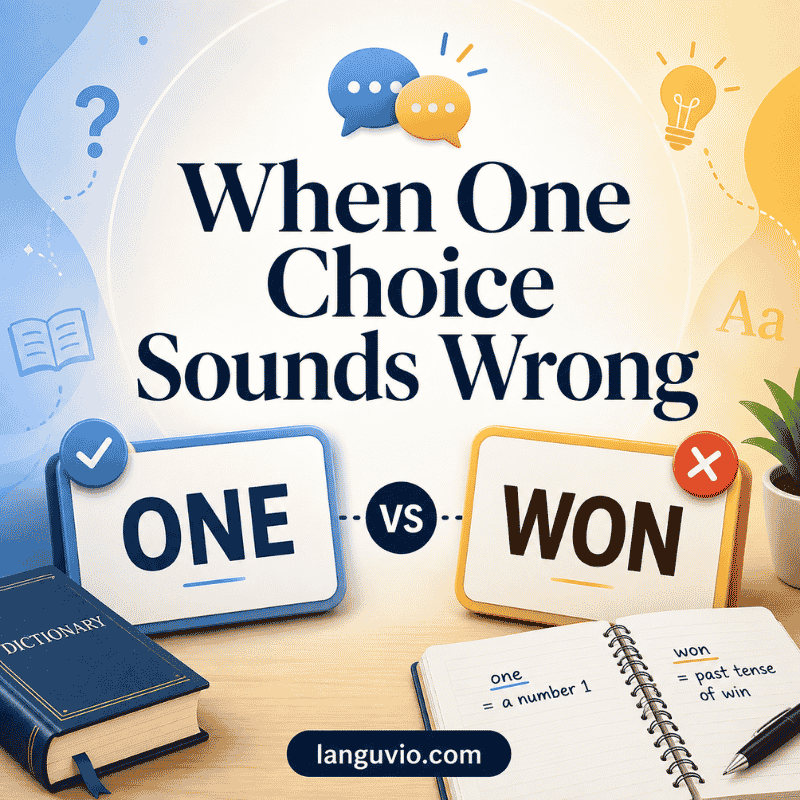
The wrong spelling can make a sentence confusing.
Wrong: She one the race.
Correct: She won the race.
This sentence is about victory, not the number 1.
Wrong: I need won more minute.
Correct: I need one more minute.
Here, the sentence is about amount, not winning.
Wrong: He is the won with the red backpack.
Correct: He is the one with the red backpack.
In that example, the word points to a person, so one is correct.
Wrong: We one a prize at the fundraiser.
Correct: We won a prize at the fundraiser.
Because the sentence means “we got a prize by winning,” the correct word is won.
A spell-checker may not catch these mistakes because both words are real. Meaning is the safest guide.
Common Mistakes And Quick Fixes
Many mistakes happen when writers type by sound instead of meaning.
Wrong: Only won person signed up.
Correct: Only one person signed up.
The sentence refers to a number, so use one.
Wrong: The Lakers one last night.
Correct: The Lakers won last night.
A team can win a game, so the past form is won.
Wrong: I’ll take the small won.
Correct: I’ll take the small one.
The word replaces a noun, so one is correct.
Wrong: She has one three awards.
Correct: She has won three awards.
After has, use won when the meaning is “has achieved victory.”
Wrong: His idea one everyone’s support.
Correct: His idea won everyone’s support.
In this sentence, won means gained or earned.
Quick fix: Ask yourself, “Is this about the number 1 or a single thing?” If yes, use one. If the sentence is about winning, use won.
Everyday Examples
I have one unread message.
She won the spelling bee.
Pick one dessert from the menu.
The new restaurant won a local food award.
This is the one I told you about.
Our class won the attendance challenge.
He has one sister in Chicago.
The candidate won by a small margin.
Can you save me one slice of pizza?
They won the case after a long appeal.
I made only one mistake on the quiz.
The team has won every home game this month.
In these examples, one points to a number, item, or person. Won points to victory, success, or something gained.
Dictionary-Style Word Details
Verb
One: Not commonly used as a verb in standard US English.
Won: Commonly used as a verb form. It is the past tense and past participle of win.
Example: She won yesterday.
Example: They have won before.
Noun
One: Can work as a noun-like word or pronoun. It may refer to the number 1, a single person, or a single thing.
Example: The one on the left is mine.
Won: Can be a noun meaning the monetary unit of North Korea or South Korea.
Example: The amount was shown in won.
In most everyday US writing, won is more often used as the past form of win than as a currency word.
Synonyms
One: Exact alternatives depend on the sentence. Closest plain alternatives include single, individual, a, an, the first, or a particular one.
Example: one ticket = a single ticket
Possible opposites include many, several, or multiple, depending on the sentence.
Won: Closest plain alternatives include prevailed, triumphed, succeeded, earned, gained, or took first place.
Example: won the race = took first place in the race
A clear opposite is lost when the meaning is victory versus defeat.
Example Sentences
One: I need one volunteer for the morning shift.
One: That is the one we saw online.
One: She is one of the most reliable people on the team.
One: One should read the instructions before starting.
Won: The soccer team won in overtime.
Nina also won a free month at the gym.
At the meeting, the idea won strong support.
This year, they have won three awards.
Word History
One: This word has a long history in English and is tied to the idea of a single unit. In modern writing, it works as a number word, adjective-like word, noun-like word, and pronoun.
Won: As a verb form, won belongs to the pattern win, won, won. A separate noun won names Korean currency. The old verb won meaning “dwell” is archaic and not part of normal modern word choice.
Phrases Containing
One:
• one by one
• one of a kind
• one day
• one more
• one way or another
• on the one hand
• the one and only
Won:
• hard-won
• won by a landslide
• won first place
• won the game
• won the award
• won support
• won over
FAQs
Use one when you mean the number 1, a single person, or a single thing. Use won when you mean the past tense of win.
Correct: I need one ticket.
Correct: Our team won the game.
One means “1” or “a single item.” Won means “was victorious” or “successfully gained something.” They sound the same, but they are spelled differently because they have different meanings.
Yes. One and won are homophones in standard American English. That means they sound alike but have different spellings and meanings.
Use one when talking about a number, a single person, a single thing, or a specific choice.
Examples:
I have one question.
This is the one I wanted.
She is one of our best players.
Use won when talking about winning in the past.
Examples:
He won the race.
They won first place.
The company won the contract.
No. Won is usually the past tense and past participle of win, but it can also be a noun for Korean currency. In everyday US writing, most confusion happens when people mix up won with one.
Yes. One can be used as a pronoun when it replaces a noun that is already clear.
Example: I like the red shirt, but the blue one is cheaper.
People often mix them up because one and won sound the same. Since both are real words, spell-check may not always catch the mistake. The best fix is to check the meaning of the sentence.
Remember this: one counts, won wins.
Use one for the number or single thing. Use won for victory or success.
Conclusion
The difference between one and won is easy to remember once you focus on meaning.
Use one for the number 1, a single person, a single thing, or a word that replaces a noun.
Use won for the past tense or past participle of win.
The best memory trick is simple: one counts, and won wins.